
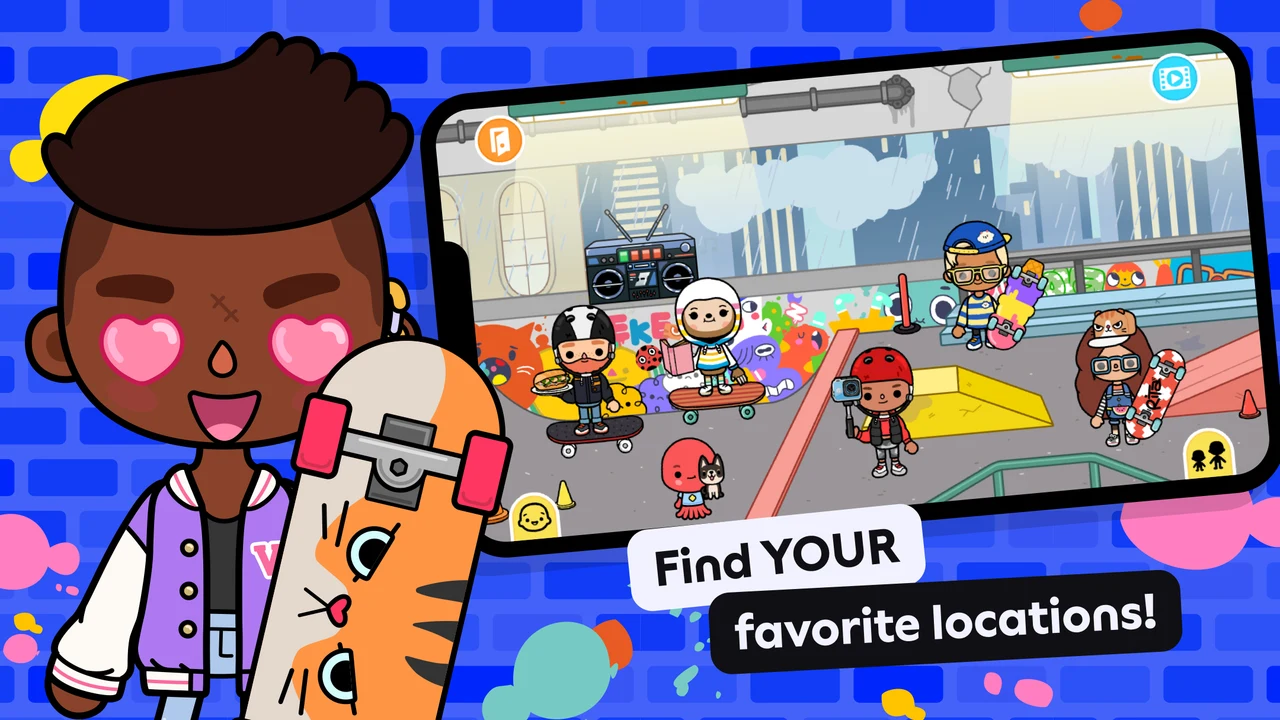
A new location gives your Toca Boca story a reason to move. The interesting part is the connection: who leaves home, where they go and what changes when they get there.
Start with a few places you can recognize. You do not need a complete tour of every district to tell a good story. This guide uses a school-day route to show how a small part of the map can become a connected world.
Find a place, then learn what happens there
Look for the setting you want on the world map. Enter it and spend a moment exploring its objects and characters before planning the full scene. A shop suggests an errand; a school suggests a meeting or a lesson; a hangout gives the cast somewhere to gather.
The cover shows the skatepark in the Activity House, a location featured in the publisher’s game artwork. It is a different kind of setting from a house you furnish yourself.
Locations and Home Designer houses
A location is somewhere your cast can visit. A Home Designer house is somewhere you arrange the rooms. A school day can use both: a bedroom at home, a school stop and a place to meet afterward.
If you want to build the home part first, use the Home Designer guide. If you are choosing what belongs inside it, continue with furniture and room planning.
Try a school-day route
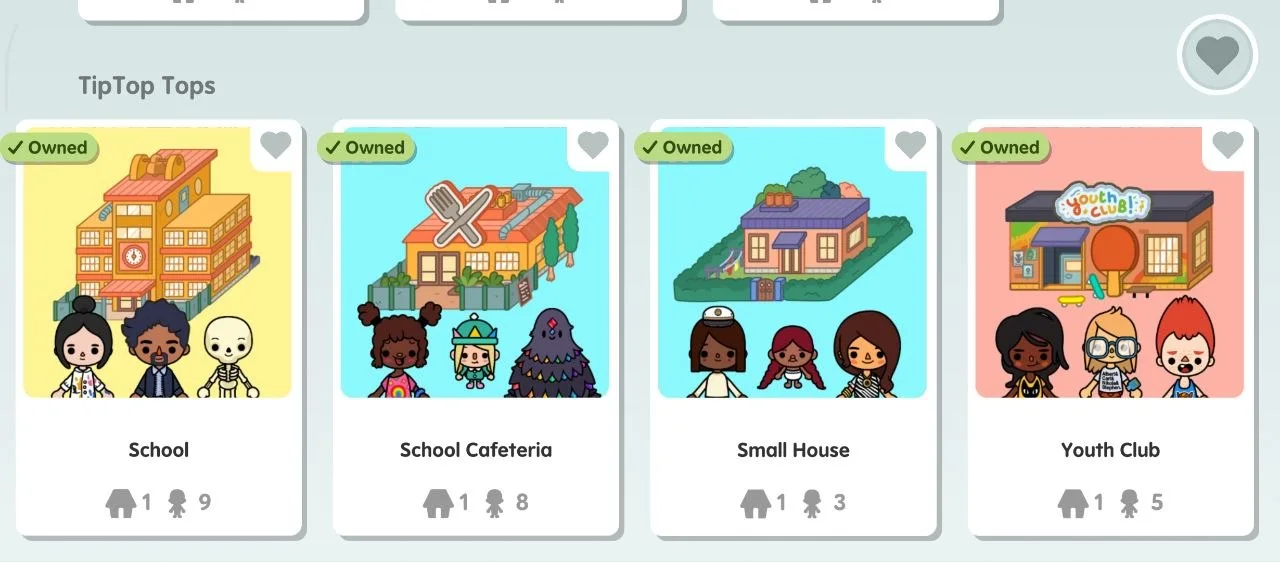
The project’s catalog image below shows School, School Cafeteria, Small House and Youth Club. Those names give us a useful starting point for a story. The image records that catalog screen; it does not establish that every platform or later release contains the same selection.
Give the route a beginning, a small problem and an ending:
- Before leaving home: one character needs something for the day, such as a bag or a lunch prop.
- At school: someone notices it is missing, or another character has brought the wrong thing.
- At the next stop: the cast works out what happened and makes a new plan together.
This is a story prompt you can adapt to the places in your own game. There is no required mission or reward attached to completing it.
Keep the world connected with a small cast
Use two or three recognizable characters instead of introducing someone new in every scene. Give each one a detail that stays the same: a color, hairstyle or favorite accessory.
Take one prop along as the connection between places. A bag can explain why someone goes back home. A gift can explain a visit. You can make a new story with the same locations simply by changing what that prop means.
For help making a cast that stays recognizable, open the Character Creator guide.
Plan the next visit
Keep a short list of places you want to return to, with a reason beside each name. “The place where the friends meet” is easier to use than a long list of locations you have not explored.
A named location’s availability depends on the edition and release on your device. Return to the All Unlocked overview for the main content categories, or choose the iPhone & iPad or Android download route.